PRIVATE LABEL COLOR GEL
Build color around
how it needs to perform.
Choose the formula route, coverage level and color structure before expanding the shade count. We help turn those decisions into a range your market can understand and reorder.
- Opaque, one coat and sheer options
- Custom shade matching
- Coordinated packaging
START WITH THE BRIEF
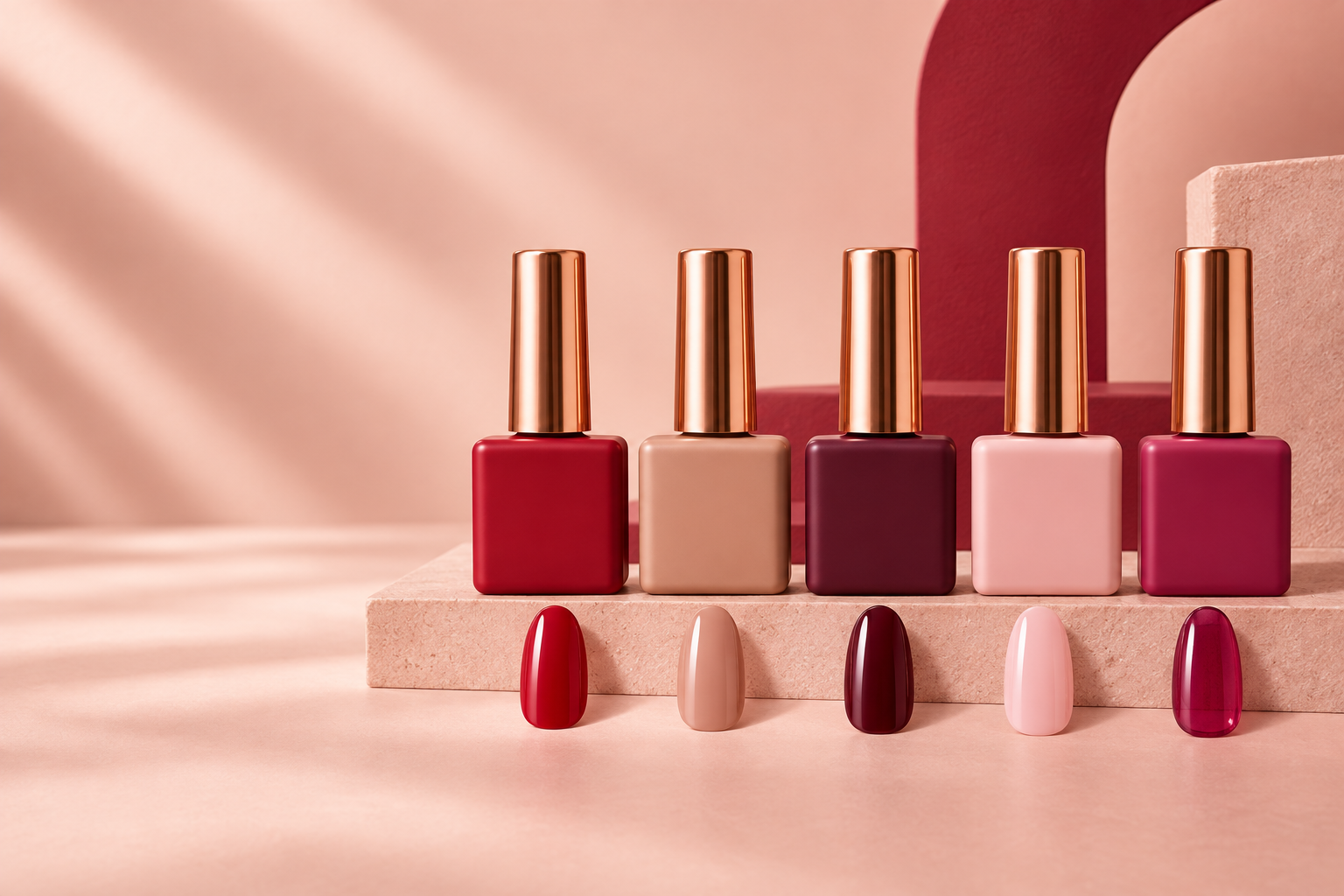
Three decisions shape the range.
A useful development brief says more than “gel polish in our colors.” It defines how the product should apply, cover and sell.
Formula route
Choose around the selling market, target user, performance brief and ingredient exclusions.
Color payoff
Specify standard coverage, dense one coat color or buildable translucent jelly.
Collection logic
Build useful color families instead of selecting isolated shades from a large chart.
TWO FORMULA ROUTES
Choose for the destination.
Confirm through samples.
Conventional formula
A mature starting route for markets and uses where the selected HEMA/TPO-containing formula is permitted.
- Cost-conscious formulation choices
- Established development experience
- Strong application and finish options
Projects prioritizing proven performance and price where local requirements allow.
HEMA & TPO-free formula
A separate route developed without these two ingredients for brands with exclusion requirements and specific market plans.
- Supports HEMA- and TPO-exclusion briefs
- Suitable starting point for TPO-restricted markets
- Performance, cure and shade confirmed by sample
Brands planning around ingredient exclusions or a more sensitive-positioned assortment.
Formula availability and compliance depend on the exact product, claims and destination. Confirm the final INCI and supporting documents before launch.
COLOR PAYOFF OPTIONS
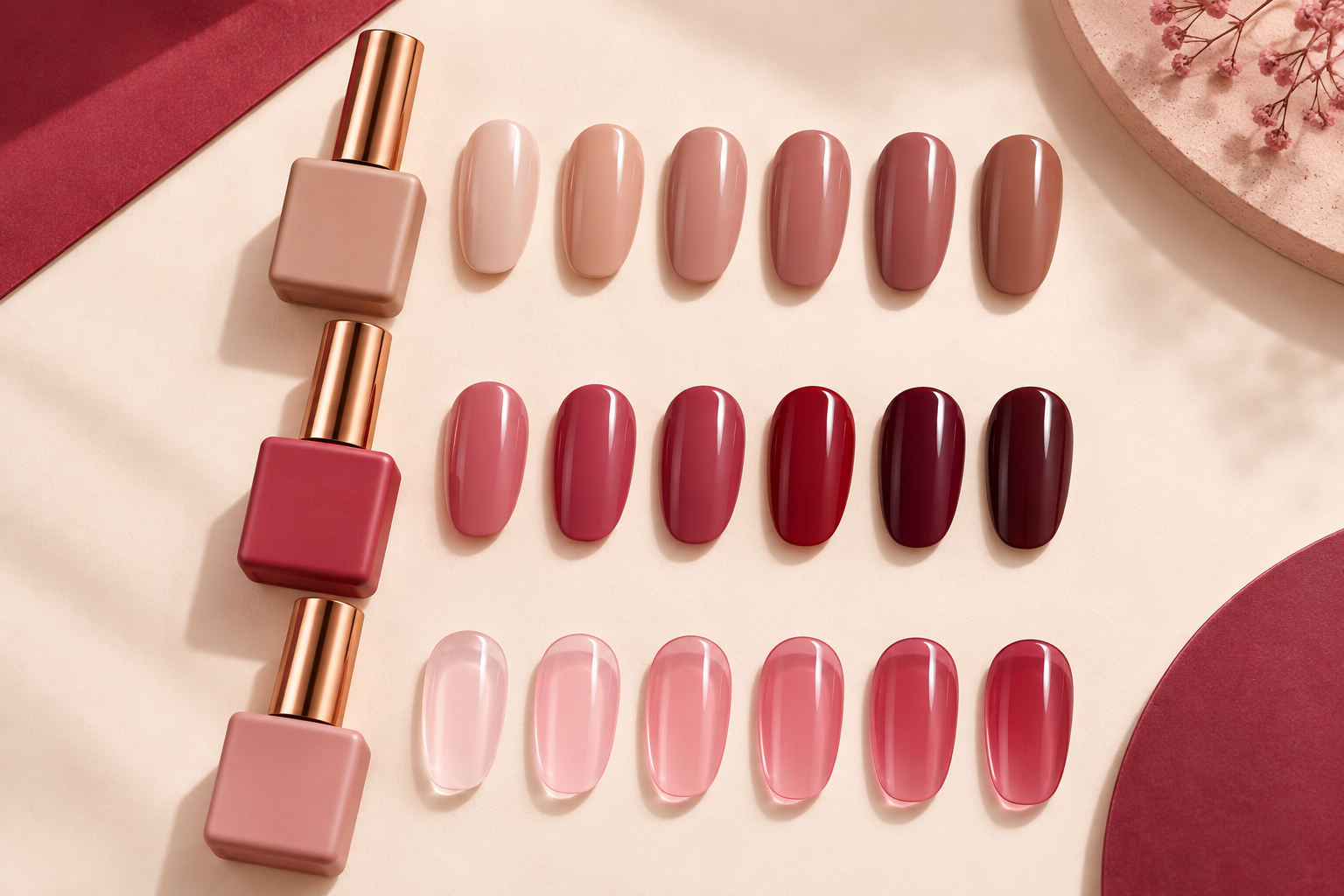
Not every shade should cover the same way.
Coverage is part of the product concept. Select it deliberately so application expectations, price and shade appearance stay aligned.
Standard solid coverage
Balanced pigment for controlled application, typically built with two thin coats.
One coat coverage
Dense color payoff designed to cover efficiently in one controlled coat where the shade and formula allow.
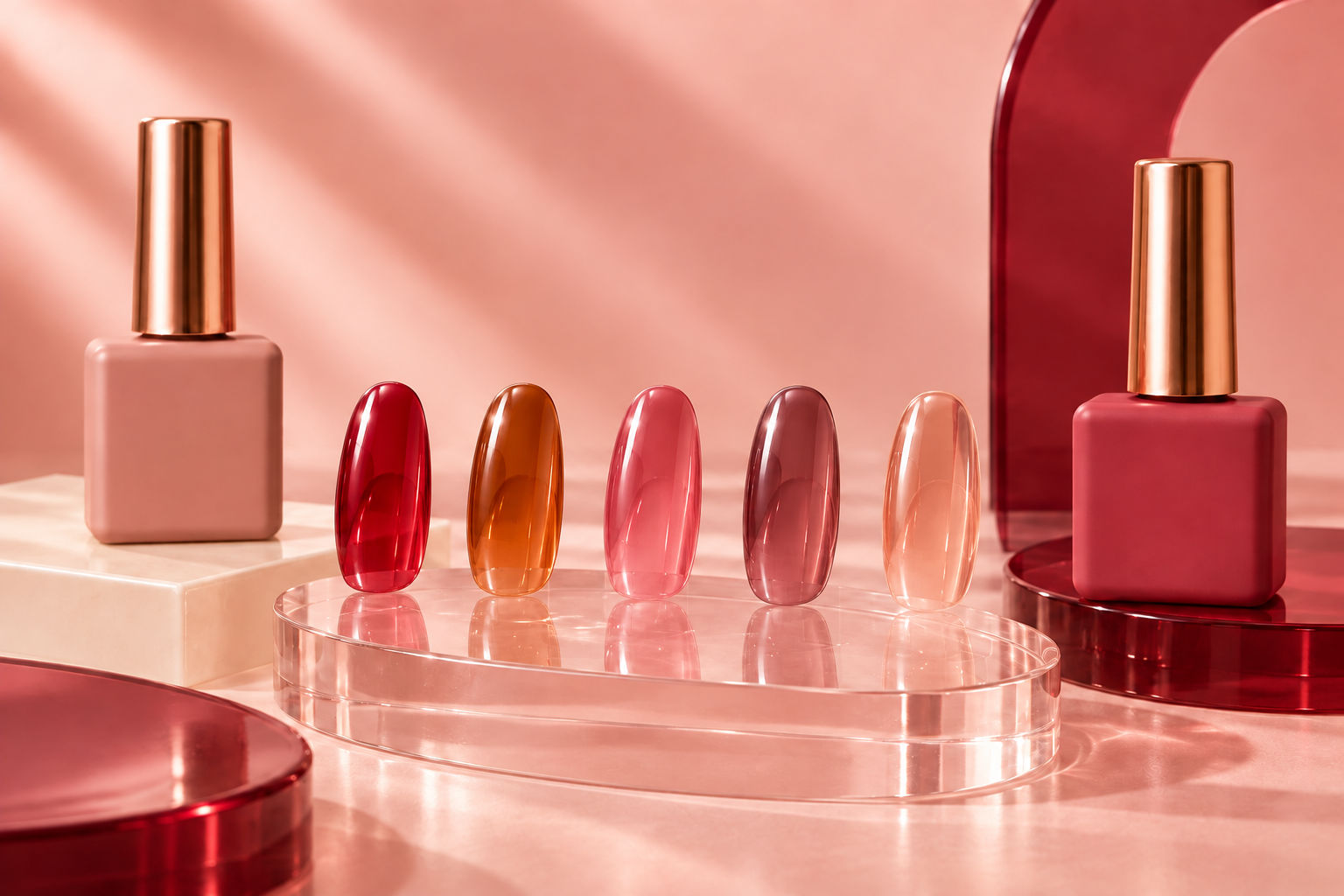
Translucent jelly
Buildable, see-through color for glass-like depth, layering and modern sheer looks.
THE SHEER COLOR EDIT
Transparency is a feature,
not missing pigment.
Jelly and glass-like colors remain a strong direction because one shade can move from a light tint to deeper color through layering. The format also works well with chrome, magnetic effects and clear extensions.
COLOR ARCHITECTURE
Build families customers can shop.
A large library becomes more useful when it is organized around purchase behavior, price points and launch timing.
Everyday anchors
Nudes, reds, pinks and reliable darks that support repeat orders.
Timely color edits
Focused groups for spring, summer, autumn, winter and holiday launches.
Fast-moving accents
Jelly, milky, chrome-ready and effect-led colors in controlled quantities.
WHAT TO CONFIRM IN A SAMPLE
Color is only one part of approval.
Flow & leveling
The gel should move smoothly enough to level, while staying controlled around the cuticle and sidewalls.
Pigment & cure
Higher pigment is not automatically better. Color load, layer thickness and the intended lamp must work together.
Color accuracy
Approve physical samples under consistent light. Screen images and printed swatches are references, not final standards.
System compatibility
Evaluate color between the selected base and top coat, not as an isolated layer.
FROM COLOR BRIEF TO PRODUCTION
Keep the approved reference clear.
- 01Define market & formula
Confirm destination, target users and ingredient exclusions.
- 02Build the color edit
Select core families, coverage levels and trend additions.
- 03Approve samples
Review application, cure, opacity, color and complete-system wear.
- 04Lock packaging & codes
Coordinate bottle, brush, labels, shade codes and order records.
COLOR GEL FAQ
Questions before sampling.
Is one coat coverage available for every color?
Not automatically. Pigment behavior differs by shade, and very high color load can affect flow or curing. Confirm each target shade and application thickness through samples.
What is the difference between standard and one coat coverage?
Standard coverage is designed to build evenly in thin layers, commonly two coats. One coat coverage prioritizes denser initial payoff for shades and formulas that can support it.
Can translucent gel be customized?
Yes. Transparency, undertone and buildability can be discussed for jelly, syrup and glass-like color directions. Physical samples are required to approve the effect.
Can I combine both formula routes in one brand?
That depends on your market strategy and how clearly the products can be documented and communicated. Many brands prefer one consistent route within a collection.
How should I choose from a large color library?
Start with a commercial structure: core repeat colors, market-specific families and a smaller trend group. Then approve the final shades against physical references.
YOUR FORMULA. YOUR COVERAGE. YOUR COLORS.
Turn your color direction into a sample brief.
Tell us your market, formula preference, coverage goals and color families. We’ll help organize the next sampling step.
Discuss your color gel project