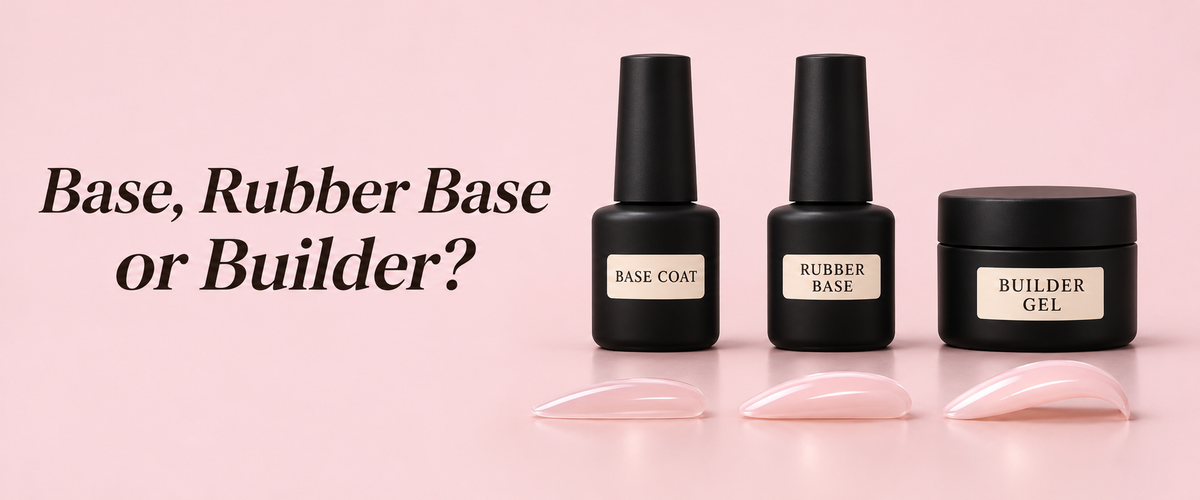
Base coat, rubber base and builder gel often appear beside each other in a supplier catalogue. For a new brand owner, the names can sound like different versions of the same product. They actually describe different product roles, although individual formulas can overlap.
Understanding those roles helps you write clearer descriptions and avoid promising that one bottle can perform every nail service.
Base coat: the foundation of the color system A standard gel base coat is commonly used as the foundation beneath compatible gel color. Its main role is not to create a long extension or a large structural apex. The precise application still depends on the selected product.
For a starter range, think of the base as one part of a coordinated system. A good-looking color swatch does not establish that an unrelated base and top coat work with it. Ask which products were used together during evaluation.
Rubber base: flexible support and optional color Rubber base is usually positioned as a more flexible, fuller-bodied foundation that can smooth the appearance of the natural nail and provide light reinforcement. Some versions are clear; others include sheer, nude or camouflage color.
The word “rubber” does not tell you the complete ingredient list or guarantee a particular wear time. It also does not mean every formula is designed for extensions. Confirm the intended layer role and permitted service before writing your product page.
Builder gel: deliberate structure Builder gel is selected when a service needs more intentional structure, such as an overlay, an apex or an approved extension technique. It may come in a jar or a bottle.
Packaging is not a reliable shortcut for removal instructions. A bottle does not automatically mean soak-off, and a jar does not replace the need to confirm the formula. Ask about viscosity, leveling, intended length and maintenance as separate questions.
Match a small range to a clear customer If your customer mainly offers gel-color manicures, a coordinated base, color and top system may be the clearest starting point. If the customer wants natural-looking tinted overlays, a verified color rubber base could have a distinct role. If structured services are central to the customer’s work, a builder deserves its own explanation and professional assessment.
This is a product map, not a rule that every new brand needs all three categories. Adding categories before understanding their differences can make a small collection harder to explain.
Ask these questions before approving a label What is the intended service? Does this formula require a separate base? Which lamp and application instructions apply? Is maintenance based on soak-off, filing, infill or another specified approach? What training does the intended user need?
Keep the answers attached to the exact formula and shade. Avoid copying instructions from a similar-looking product because pigment, thickness and system compatibility can differ.
SUSANSAY’s rubber base page and builder gel guide separate these choices by service and format. Use them to build a focused shortlist, then confirm the actual system before presenting it to customers.